Increasing qualified leads with conversational AI
I drove the work to business improvement by designing the bot experience.
Situation
Hewlett Packard Enterprise's gated content had a fatal flaw: 8% conversion rate and 40% fake data. Essentially, the form you have to fill out to get a report. At $180 per qualified lead, HPE was paying 2.5x the industry benchmark for low-quality leads.
Strategic bet
I proposed a new data capture model. My hypothesis was that users will gradually share real information in exchange for genuine value.
Execution
The bot was published in two major releases. The first was learning and adjusting. The second focused on conversational design and information gathering.
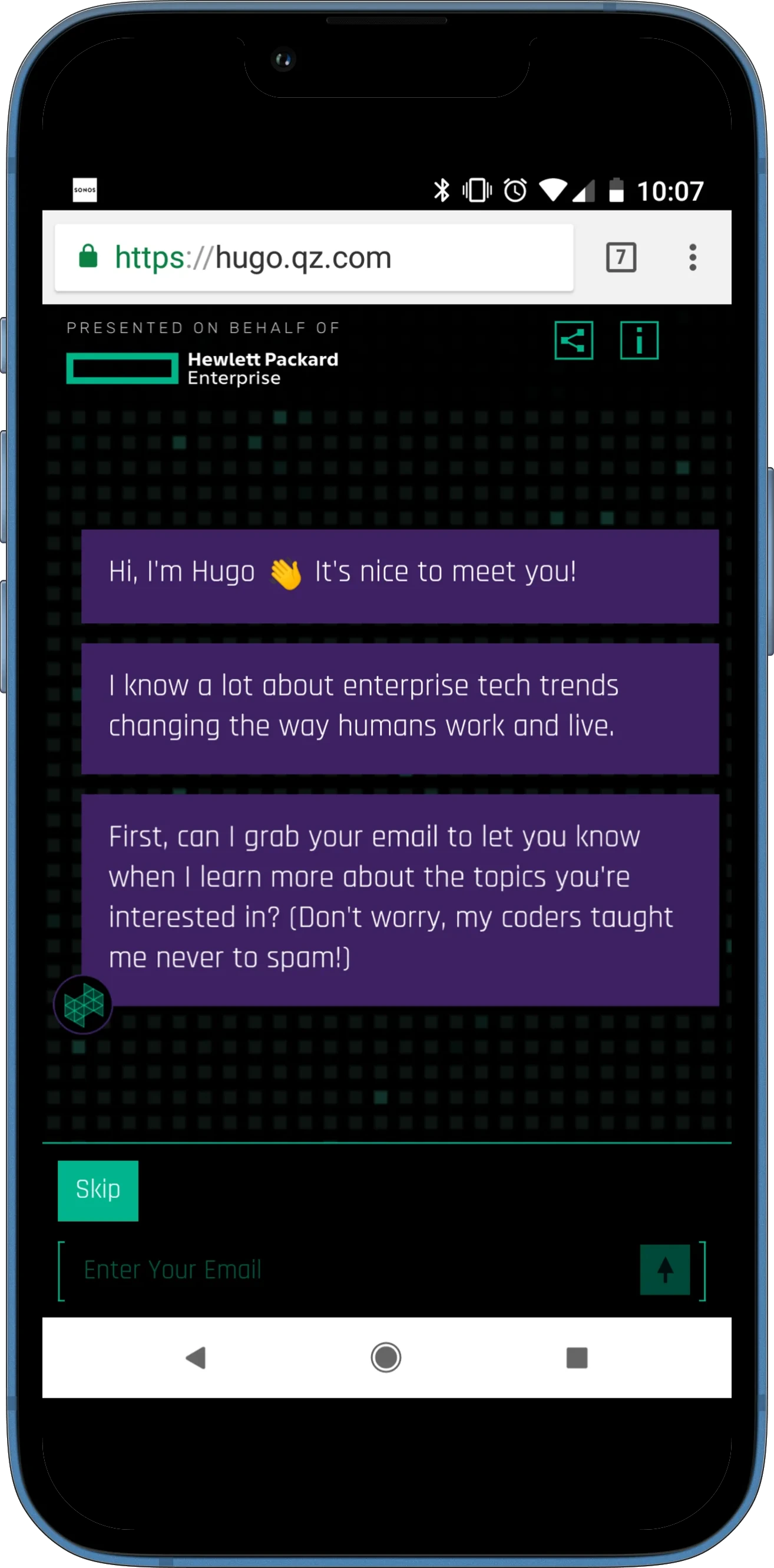
Release 1
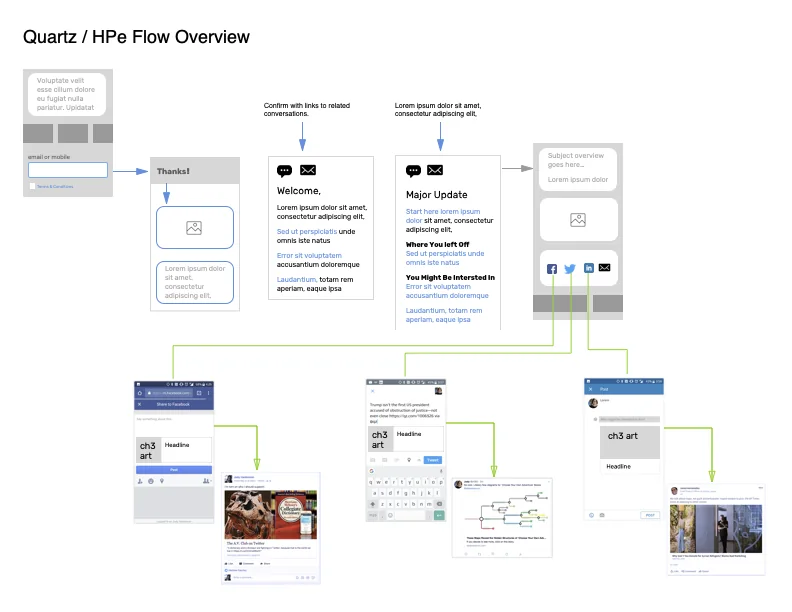
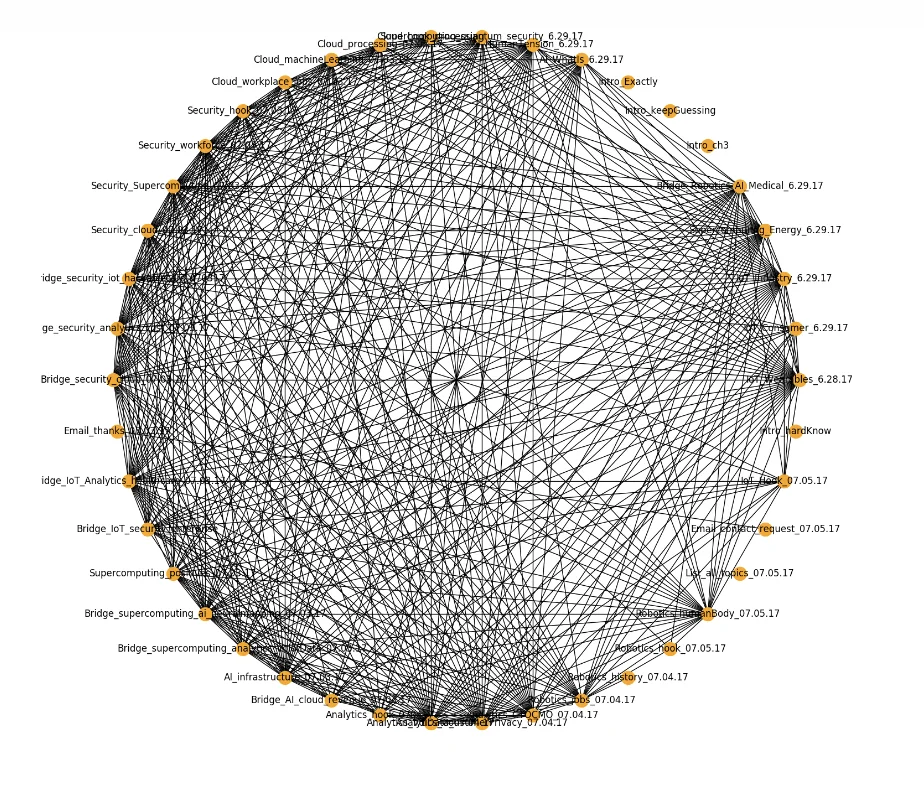
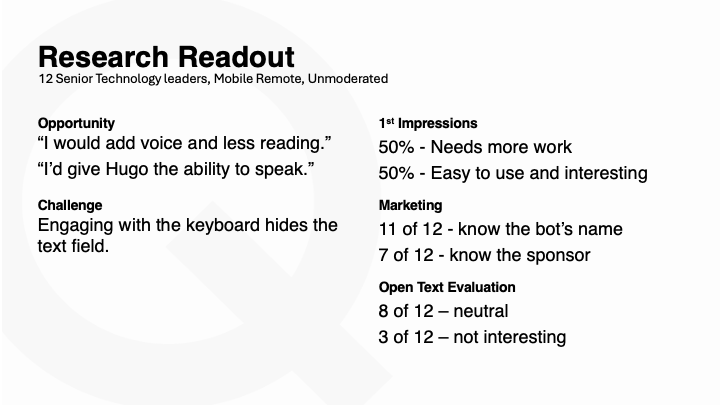
I designed content architecture connecting 40+ enterprise topics with intelligent bridging - the content pathways are illustrated below on the right. I also interviewed 12 potential users and learned there was a fatal flaw in the chat box.
User research
In the research, I found a fatal flaw in the data capture. However my goal to assess the users' understanding of Hugo’s premise, branding, and interaction design yielded positing feedback.
Release 2
I redesigned the conversation with progressive capture—users consumed 3–4 pieces of content before we asked for information, things like first name or company name. My approach minimized the feeling of a sales pitch.
Pushback
Sales: Wanted all data upfront. I ran a pilot proving 60% more completions with progressive capture—reframed as "more qualified leads" not "slower capture."
Engineering: Wanted sophisticated NLP first. I argued we needed to understand pacing before building complexity. Release 1 would generate training data for Release 2.